AI-Powered A2P Compliance Validation
This article provides an overview of the automated compliance review system designed to streamline the A2P (Application-to-Person) messaging registration process. By leveraging intelligent validation, this feature identifies common compliance gaps in submission data before they reach carrier review, ensuring a smoother path to approval.
Key Features and Benefits
Section titled “Key Features and Benefits”The primary goal of this validation layer is to reduce the friction often associated with messaging compliance. By catching errors early, users can avoid the lengthy cycles of rejection and resubmission.
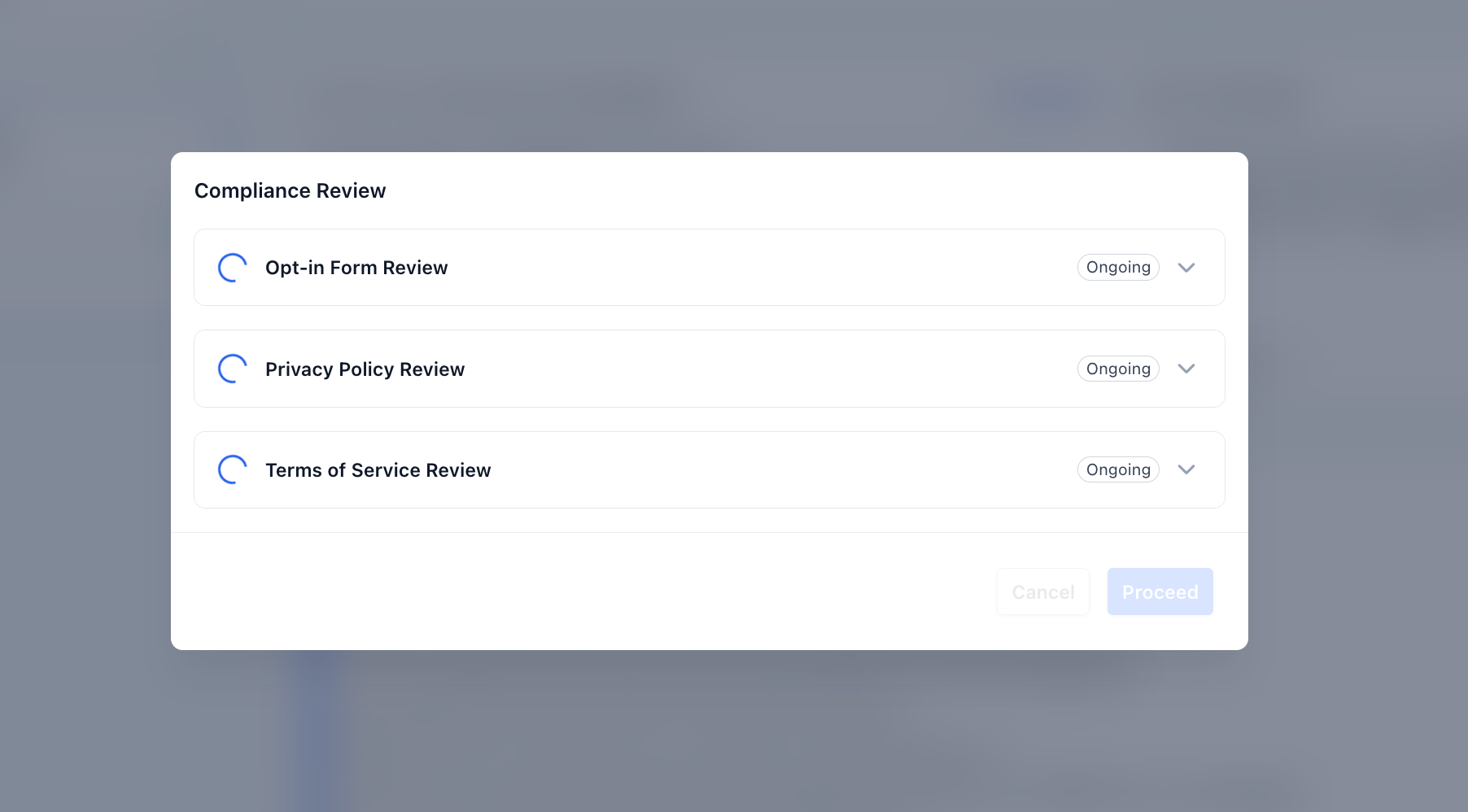
- Pre-Submission Scanning: Automatically validates Opt-in forms, Privacy Policies, and Terms of Service links against current carrier requirements.
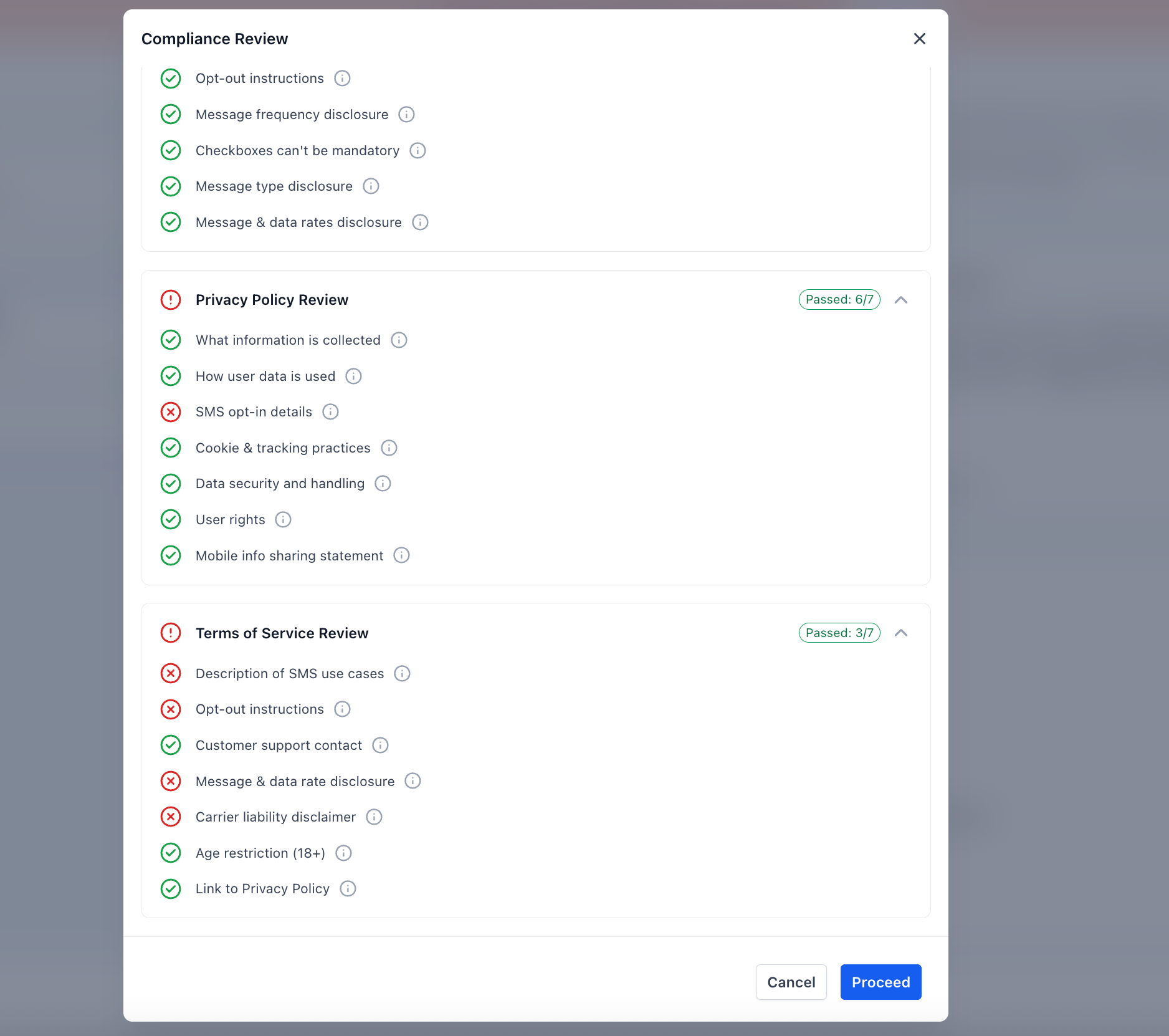
- Actionable Feedback: Provides a line-by-line breakdown of compliance criteria, offering clear guidance on what needs to be updated
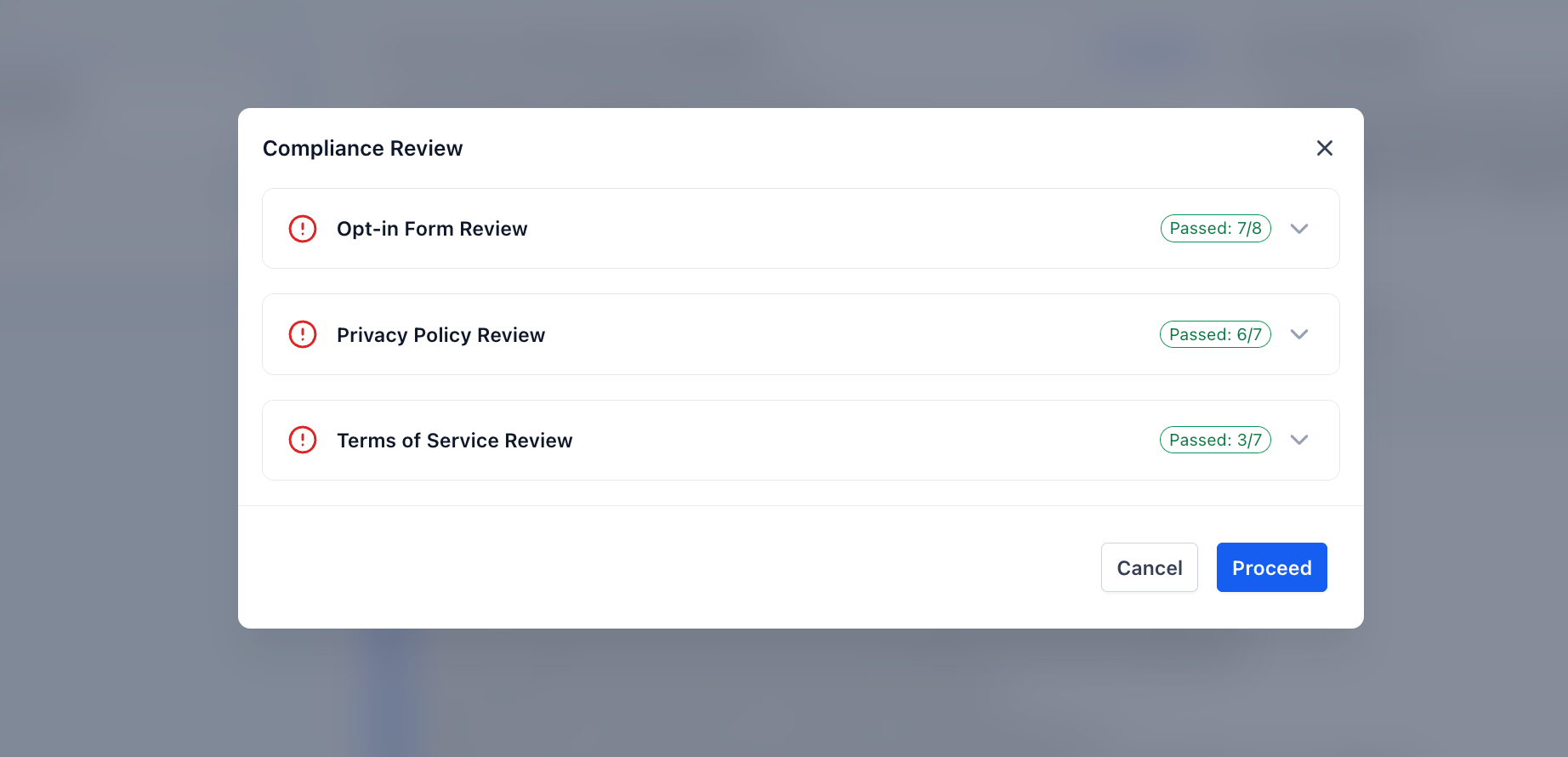
- Reduced Rejection Rates: Addresses the most common causes of campaign failure, such as missing opt-in disclosures or incomplete legal links.
- Dynamic Criteria Tracking: Stays updated with evolving carrier mandates, including requirements from bodies like the CTIA and TCR.
- Risk Mitigation: Allows users to visualize potential red flags and address them before incurring the time and cost of a carrier review.
Special Requirements and Limitations
Section titled “Special Requirements and Limitations”- Opt-in Methods: This automated review currently supports Website Forms and Facebook Lead Forms. Other opt-in methods may require manual verification.
- Not a Guarantee: While this tool significantly reduces the likelihood of rejection, passing the internal validation does not guarantee carrier approval. Carriers may reject applications based on specific use cases or internal policy changes.
- Blocking Mechanism: The campaign submission is temporarily held until the compliance review window has been viewed, ensuring users are aware of their compliance status.
Pro Tips for Successful Approval
Section titled “Pro Tips for Successful Approval”When designing your Opt-in form, ensure the “Consent Checkbox” is not pre-checked. Carriers view pre-checked boxes as a violation of “explicit consent” rules. Additionally, always ensure your Privacy Policy explicitly mentions that mobile information will not be shared with third parties for marketing purposes, as this is a frequent point of failure in manual carrier audits.
**Question:Why is my campaign submission being flagged if I have a Privacy Policy?
Answer: The validator checks for specific language within the policy. Even if a link exists, it may be flagged if it lacks a clear statement on how SMS data is handled or if it fails to disclose that data is not sold to third parties.
**Question:Can I submit my application if the validation shows “Missing Criteria”?
Answer: Yes, the system does not strictly prevent submission if criteria are flagged. However, proceeding with missing elements significantly increases the risk of carrier rejection and potential resubmission fees.
**Question:What specific disclosures must be on my Opt-in form?
Answer: Your form should clearly display the Business Name, an explicit consent checkbox, links to your Terms and Privacy Policy, message frequency disclosures (e.g., “Msg frequency varies”), and “Msg & Data rates may apply” text.
**Question:Does this tool check the actual content of my text messages?
Answer: This specific validation tool focuses on the “Opt-in” flow and legal documentation. While the campaign use case is a factor in approval, the automated review is primarily centered on the structural compliance of your data collection points.
**Question:How often are the compliance criteria updated?
Answer: The validation logic is updated dynamically to reflect the latest mandates from carriers and industry regulators to ensure users are always testing against current standards.
Question: Does the automated review cover all types of opt-in methods?
Answer: No, the automated review currently supports Website Forms and Facebook Lead Forms. If you use other methods, they may require a manual verification process.